
3 Cultural Hubs to Visit as a College Freshman in Los Angeles
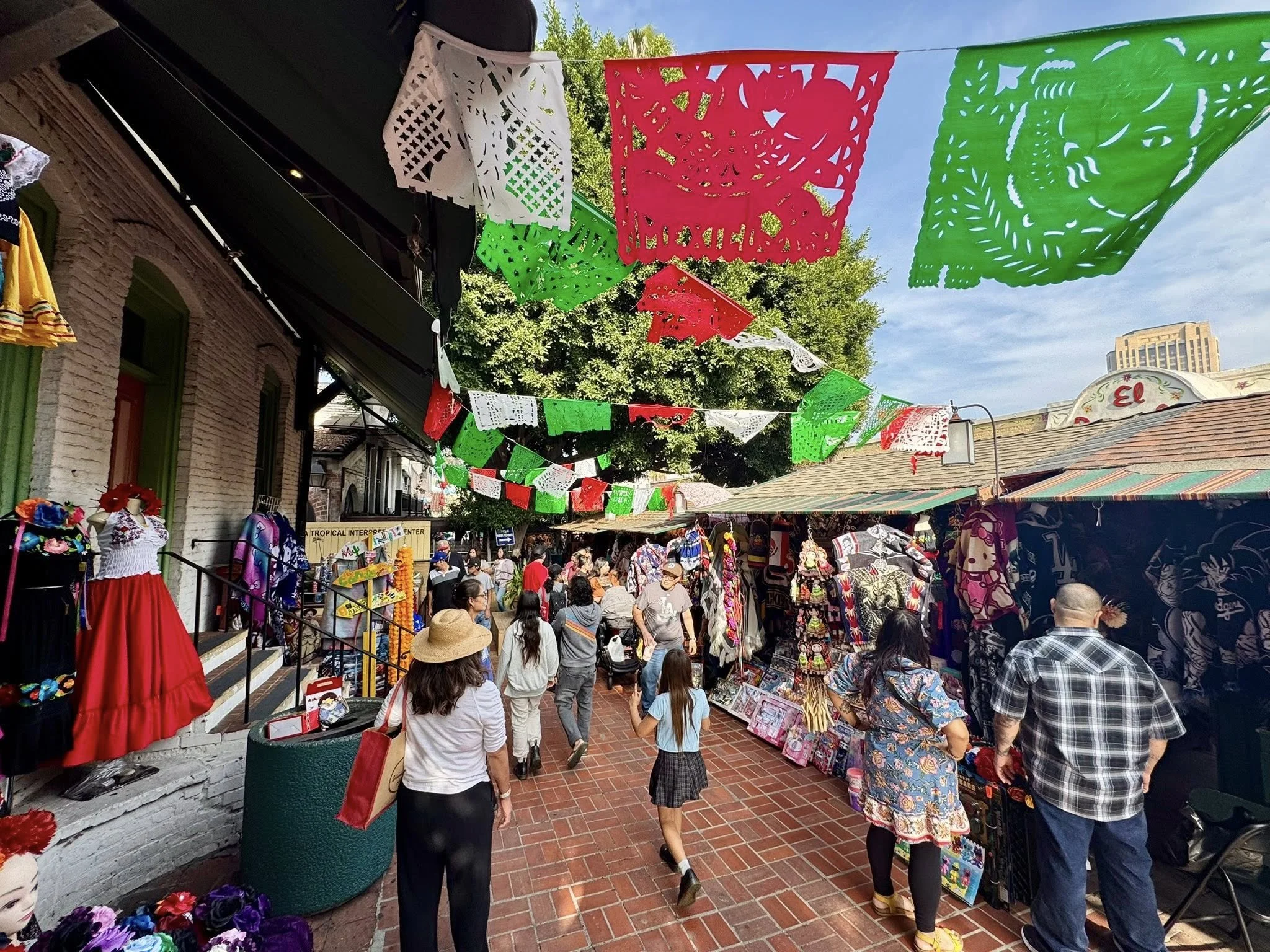
Shoppers in the Olvera Street Marketplace of El Pueblo neighborhood in Downtown Los Angeles (via Plaza Olvera on Facebook).
By OMAR M.
Freshman year for students new to Los Angeles can be overwhelming. In a city with over 3.8 million people (which itself is misleading considering all the other cities with millions of others near LA proper that are widely recognized as being LA), students new to the area may have a lot of curiosity about where to explore off campus.
Of course, new students will hear a lot about the big tourist spots like Santa Monica Beach, the Getty Center, and the Griffith Observatory. And while those spots can definitely be engaging for folks, Los Angeles has various other locations that often go overlooked by the touristy norm of the city.
A prime example of areas often overlooked are the cultural neighborhoods in LA. These neighborhoods, which act as hubs for specific cultures, offer any interested person awesome culturally-immersive experiences ranging from marketplaces to food to art performances. At the same time, these cultural neighborhoods allow us to embrace and honor the people who truly make up the communities of Los Angeles.
Historic Filipinotown
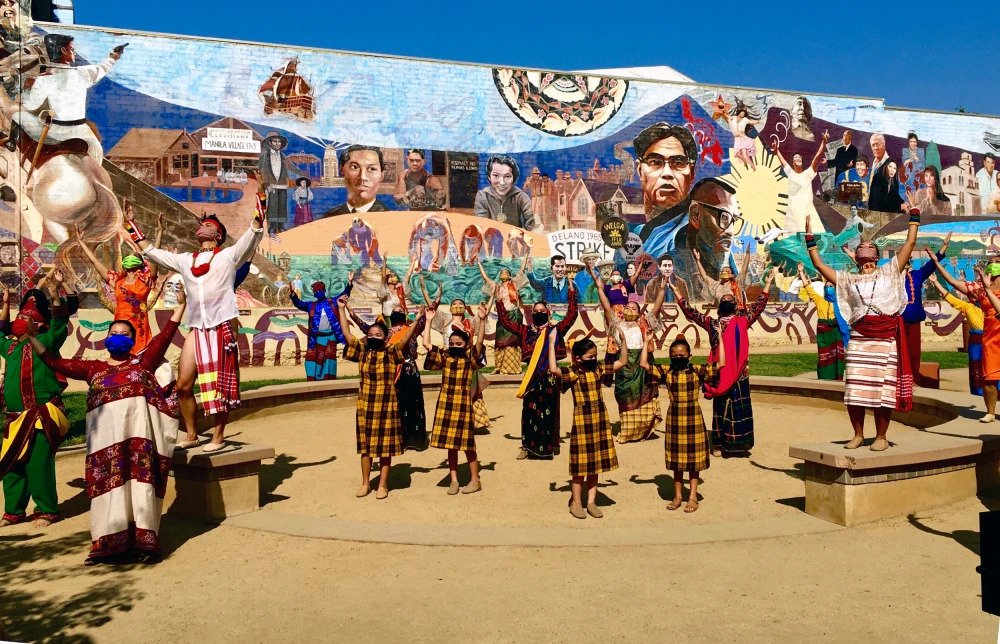
Filipino cultural celebration in Unidad Park, happening in front of the Gintong Kasaysayan, Gintong Pamana mural (via NBC).
Historic Filipinotown (“HiFi”) is the largest Filipino community outside of the Philippines.
Multiple landmarks span across this 2.1 square miles ethnic enclave. Whether it be the Eastern Gateway 30-foot arch marking the beginning of HiFi, or the giant Gintong Kasaysayan, Gintong Pamana (“A Glorious History, A Golden Legacy”) mural in Unidad Park, there are many beautiful sights to see.
The mural in Unidad Park itself gives a visual-telling of over 4,000 years of history of the Filipino diaspora from the islands of the Phillipines to the barrios of Los Angeles. The mural highlights the work of Filipino Americans in the United Farm Workers Movement, specifically depicting the Delano Grape Strike of 1965, showcasing solidarity between the Filipino Americans and Mexican American communities.
And besides the giant mural, inside Unidad Park there is a community garden where locals share fresh produce with each other.
Across HiFi there are many food and drink spots to indulge in, from traditional Filipino dishes to various coffee spots. HiFi Kitchen is popular for its adobo rice bowls and signature lattes. At the same time, certain East Asian and Latino options—like Taiwanese boba and Cuban baked goods—provide alternative options to enjoy.
The Pilipino Workers Center is a community organization that advocates for the living and working conditions of Filipino Americans in the area. For anyone wanting to get a detailed understanding of the cultural significance of Historic Filipinotown, the organization offers tours of HiFi in decorated Filipino Jeepney’s straight from the Philipines.
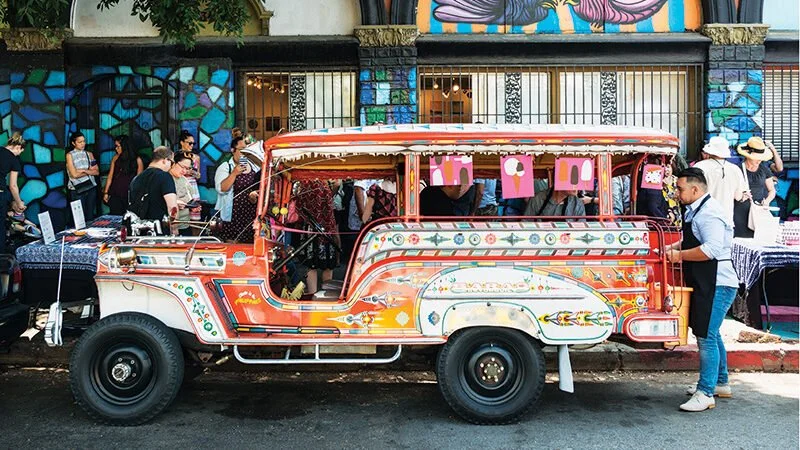
A jeepney parked in Historic Filipinotown (via Los Angeles Magazine).
Leimert Park Village
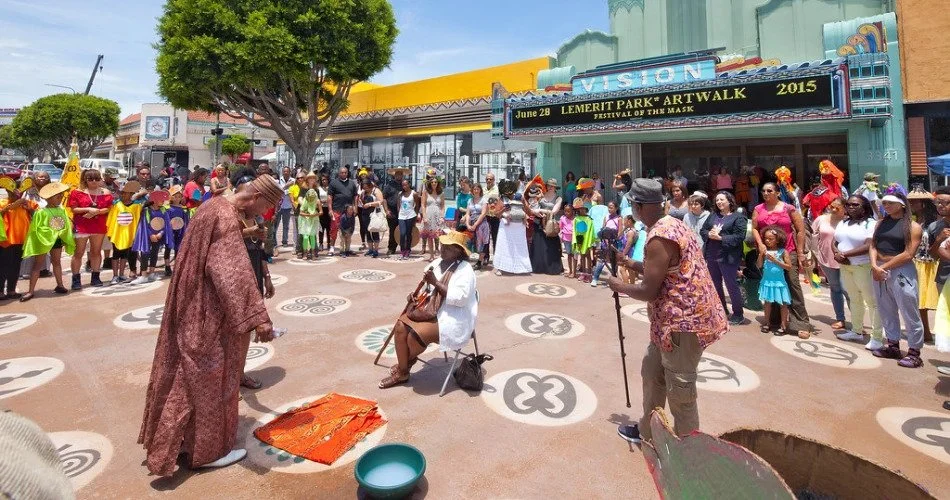
African American cultural celebration in Leimert Park Village Plaza (via Leimert Park Village).
Leimert Park Village Plaza is a 1.5-mile African American musical hub within the Leimert Park neighborhood of South Los Angeles.
Every Sunday in the Plaza, you can watch a drum circle community members participate in to bring folks together and celebrate ancestral African culture.
On the last Sunday of each month, along 43rd Place and Degnan Boulevard, the Leimert Park Art Walk takes place, which is a free event in which cultural organizations and businesses in the area showcase their talent in performances, art presentations, and vendors of fashion and food.
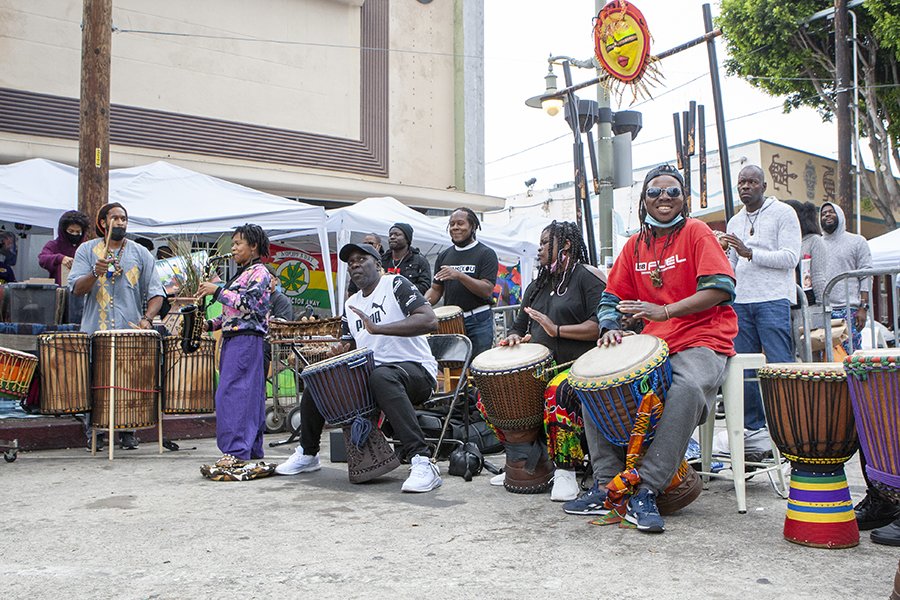
Community members performing in the weekly drum circle in Leimert Park Village Plaza (via Los Angeles Standard Newspaper).
Cultural arts comprise much of the Leimert Park Village Plaza. The Plaza is home to the Barbara Morrison Performing Arts Center, which hosts performing and vocal arts workshops, as well as Sunday Church service and Bible studies. The Center was opened by Barbara Morrison herself in 2009. Morrison was an LA-based jazz singer who gave members of the community free singing lessons even before the Center opened.
Other performance arts centers like the Fernando Pullum Community Arts Center, Vision Theater Performing Arts Center, and World Stage Performing Arts Center, allow youth from the South Los Angeles community to learn African American vocal and performance arts from widely-recognized African American singers and performers in the LA community.
Nearby the Plaza is Malik Books, which is a bookstore entirely dedicated to literature by Black authors, and books with topics surrounding the African diaspora.
The largest of the Plaza’s events is the annual Leimert Park Jazz Festival, a paid-for event in which jazz ensembles perform intricate musical productions for audiences. These ensembles consist of Black musicians from the LA area, with many dialoguing with audiences about the significance of Black music and art.
El Pueblo
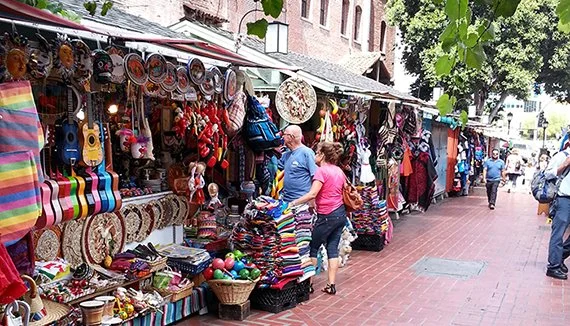
Customers shopping in the Olvera Street Marketplace in the El Pueblo neighborhood of Downtown Los Angeles (via American Planning Association).
El Pueblo is the oldest neighborhood in Los Angeles. Just 44-acres wide, the main Pueblo Plaza is surrounded by various activities to experience Mexican culture firsthand.
The main attraction of El Pueblo is by far Olvera Street, which is a pedestrian street consisting entirely of Mexican vendors selling traditional clothing, t-shirts with Mexican and Mexican American pop-culture prints, handmade bags, and a wide variety of knick-knacks. Customers wander all throughout the street every day of the week. Even if they aren’t purchasing, folks are still wandering around the marketplace absorbing the beauty of the garments on display.
Right outside of Olvera Street, in El Pueblo Plaza itself, there are constantly local singers of Mexican music performing for crowds of locals who dance and sing along. El Pueblo Plaza has wide, open space for audiences to celebrate Mexican culture with each other.
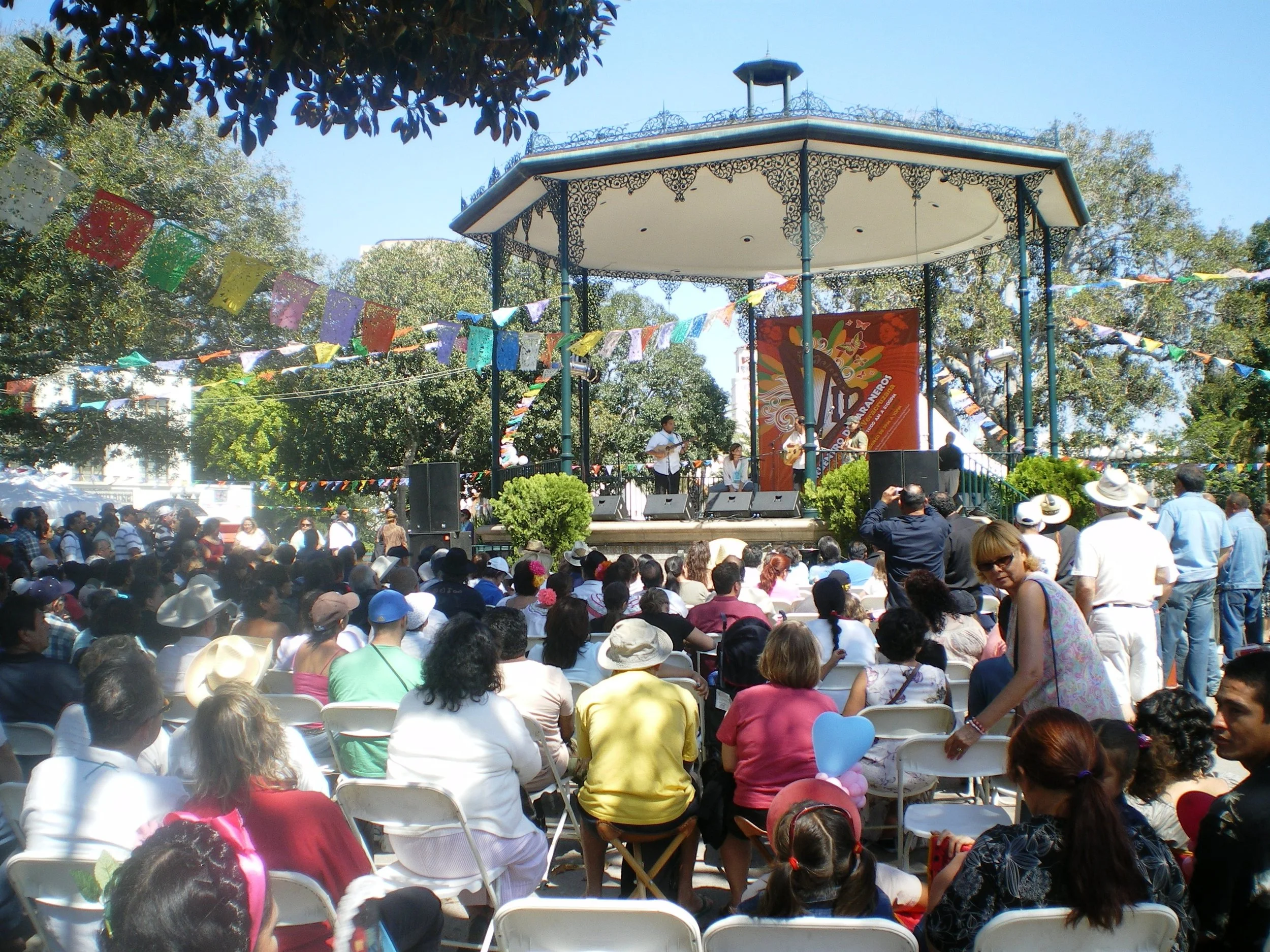
Audiences watching a musical performance in El Pueblo Plaza (via El Pueblo de Los Ángeles Historical Monument Wikipedia).
Just outside of El Pueblo Plaza, you can visit La Plaza de Cultura y Artes, which is a museum that showcases the history of Mexican American artwork in Los Angeles, spanning from the origins of the first Mexican American newspapers in the 1800s all the way to contemporary Mexican American bands.
Cross-cultural solidarity is present in El Pueblo too. Both the Italian American Museum of Los Angeles as well as the Chinese Amerian Museum of Los Angeles are right outside El Pueblo Plaza, offering immersion into other groups deep-rooted in LA too.
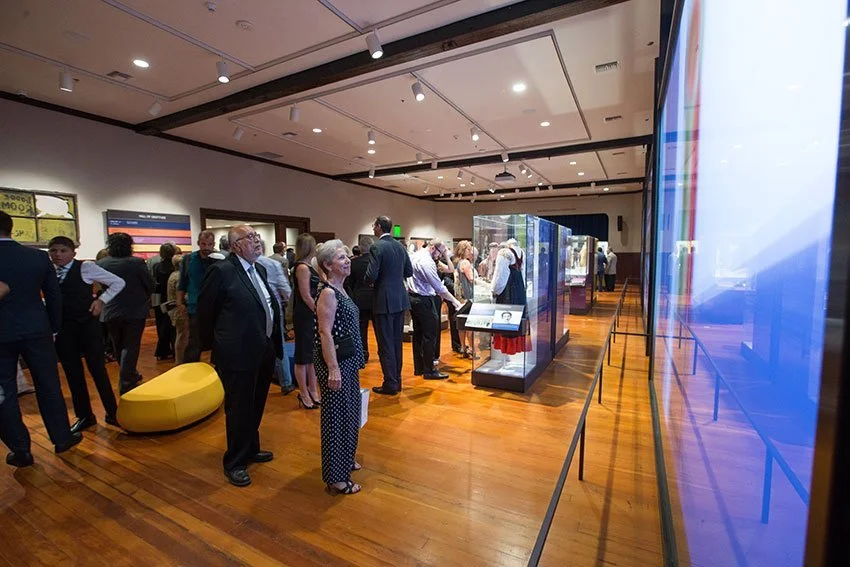
Inside the Italian American Museum of Los Angeles as visitors wander around viewing the exhibits (via Italian American Museum of Los Angeles website).
Overall, there are many ways to dive deep into the ethnic cultures represented in Los Angeles. This city is home to so many different groups of people, and learning more about the communities here can enrich anybody’s mind.
If you’re a student making your way into LA for the first time, I’d absolutely recommend checking out these cultural hubs. Standing in solidarity with the people of various ethnic groups is important, especially in times where many of these mentioned groups experiene severe injustice. And standing is solidarity really is as simple as actions like buying at the local businesses of these neighborhoods, going to the events, and simply starting conversations with folks who may come from backgrounds similar or completely different than yours.
To learn more about other cultural neighborhoods in Los Angeles, visit LA City Tourism.
.jpg)